
The Awakening of Intelligence: How AI Tools Like ChatGPT Are Breaking Through The Paywalls of Knowledge
Is there a difference between Human Intelligence HI and Artificial Intelligence AI?
Who benefits from the fomentation of the idea that AI is something to be feared?
For much of human history, intelligence has been treated like a rare and precious substance—found only in “genius” individuals, hoarded by elite institutions, and measured by narrow metrics like academic degrees, publication records, and exclusive “societies.” But what if that view is deeply wrong? What if intelligence has always been abundant, but suppressed and hidden—buried under layers of exclusion, denied the tools and access that makes it flourish?

With help from next-generation AI, Indian villagers gain easier access to and ability to share knowledge.
That’s the premise of a major new paper I’ve just completed. It argues that intelligence is not a fixed trait, but a process—one that depends on the tools, language, and systems people have access to. And right now, with the rise of artificial intelligence tools like ChatGPT and other large language models, we are witnessing the beginning of what may be the greatest expansion and flourishing of human intelligence in history.
Let me explain.
Language is the Original Intelligence Tool
We tend to think of intelligence as something locked inside our brains, a gift we are given at our birth. But even a moment’s reflection shows us that intelligence is more nurture than nature and deeply relational. We don’t just think in our heads—we think through language, symbols, drawings, maps, diagrams, conversation, and memory tools. Without language, even the most brilliant mind would be trapped in primitive drudgery of isolation.
This has been true since the beginning. Long before writing was invented, human intelligence emerged through shared knowledge—especially in our understanding of plants and the natural world. The earliest ethnobotanical knowledge, the most important and useful of intelligence, wasn’t written down, but it was profound: how to use herbs for medicine, plant parts and roots for nutrition, fibers for rope and bindings, and resonant woods to make drums that could stimulate music and broadcast vital information across distances to many ears all at once. These weren’t just tools—they were memory systems, early internet networks, and the first libraries.
But as soon as these tools were invented access to these tools became restricted. Writing, reading, publishing—these privileges were hoarded and parlayed into profits by elites, from ancient scribes to modern professors. Intelligence came to be defined not by capability, but by who had the privilege and right to be heard.
The Gatekeepers of Thought
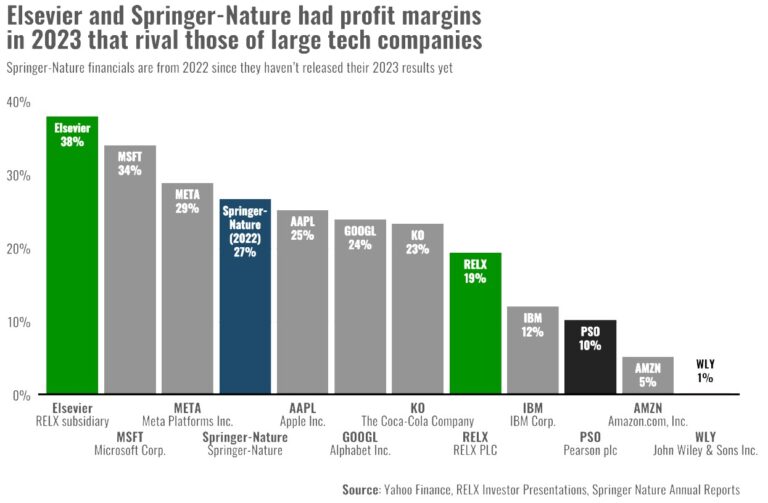
The invention of writing, the clay tablets of Mesopotamia, the hand copied book, the printing press, and modern science were each hailed as revolutions in knowledge—but they also brought new forms of gatekeeping. Today, academic journals, paywalls, peer review cliques, and in the past century the proliferation of for profit credential systems (academic institutions) still effectively impair and prevent vast numbers of intelligent, thoughtful people from contributing to the global conversation.
Even in this internet age, the world of high-status knowledge remains fiercely guarded. Most of the world’s scientific and cultural literature remains locked behind expensive subscriptions. Independent thinkers are mostly ignored unless they carry institutional affiliations. And those in non-Western, Indigenous, or marginalized communities are routinely dismissed—not because their ideas are flawed, but because the system was not built to include them.
AI: A New Literacy—and Numeracy—Tool for the Many
This is where AI tools like ChatGPT come in—not as threats, but as transformative tools of inclusion. For the first time, billions of people now have access to a thinking partner that helps them organize ideas, explore language, summarize complex topics, or begin writing even if they’ve never had formal training. AI doesn’t replace intelligence—it helps people show it.
And one of the most extraordinary breakthroughs is in mathematics—a unique, powerful form of language that underpins science, engineering, and abstract reasoning. For many people, the obsequious rules of math have long been a barrier, a source of exclusion and certainly of anxiety. But AI tools now help those without special math talent convert their ideas into equations and models, assist with proofs, generate visualizations, and solve complex problems with guidance and explanation. Math is no longer an obscure battlement it is a beneficial breath of fresh air.
This is not just helpful—it is revolutionary. It means that the cognitive gateway to mathematics, once limited to those with rare training or tutoring, is now flung open. A student who struggles with algebra can now collaborate with a personal patient AI coach. A researcher with a conceptual insight but no formal math background can now generate and test equations that express their idea. This is thinking made visible, and mathematics made participatory.
Intelligence isn’t just something you have. It’s something that’s made legible an communicable through tools. And AI is expanding both literacy and numeracy in ways humanity has never seen before.
Opinion Paper: “So what if ChatGPT wrote it?”
Multidisciplinary perspectives on opportunities, challenges and implications of generative conversational AI for research, practice and policy. International Journal of Information Management Volume 71, August 2023, 102642
The Problem Isn’t AI—It’s the attempts at Last-Mile Gatekeeping on a leveling playing field.
Yet even as AI opens these doors, the old systems are digging in. Academic publishing remains a fortress. High-impact journals still control who gets “recognized.” Reviewers still act as anonymous gatekeepers. And major AI tools—while helpful—are still subject to attempts at restriction and exclusion by those uncomfortable with this sudden leveling of the playing field.
Some critics warn that using AI might “weaken our thinking” or lead to misinformation. But these concerns often hide deeper fears—that the traditional guardians of knowledge are losing control. When everyone has access to tools of synthesis, expression, and analysis, the myth of rare genius starts to collapse. And for those invested in their academic monopoly and license to sell intelligence, that is unsettling.
The publishing business is “perverse and needless”, the Berkeley biologist Michael Eisen wrote in a 2003 article for the Guardian, declaring that it “should be a public scandal”.
Adrian Sutton, a physicist at Imperial College, told me that scientists “are all slaves to publishers.
What other industry receives its raw materials from its customers, gets those same customers to carry out the quality control of those materials, and then sells the same materials back to the customers at a vastly inflated price?”
A Proposal: An Open Literature for the World
In the full paper, I propose a bold alternative: an AI-enabled knowledge commons—a public, open, living library where anyone can publish, revise, and build upon ideas. A system where peer review is open and powered by AI, multilingual tools are standard, and reputation is based on contribution, not credentials. The Journal for profit model that came into being when the cost of typesetting, printing on paper pages, and circulation drove the need to provide less is over. The future lies where knowledge openly evolves, rather than freezes in paywalled journal archives.
Imagine a world where scientific ideas, traditional knowledge, and new insights all live together in a transparent, dynamic, and inclusive platform—supported by AI, but governed by open ethics and human collaboration. That’s not a fantasy. That’s a future we can build—if we’re willing to let go of the old fortress and open the gates.
Join the Conversation
This blog post only scratches the surface. The full paper traces these ideas across history, technology, and the future of publishing. It includes appendices reviewing similar work, and a roadmap for how AI could support a global open literature system.
If you’re curious, challenged, or inspired by these ideas, I invite you to:
-
Read the full paper (email me or comment for a copy)
-
Share your thoughts, stories, or use cases
-
Join the effort to design tools and platforms that embody the open, inclusive, intelligence ecology we so urgently need
We are not in the age of artificial intelligence. We are in the age of awakened intelligence—the intelligence of the many, rising to meet the world’s challenges with clarity, creativity, and care.
Let’s build that future together.