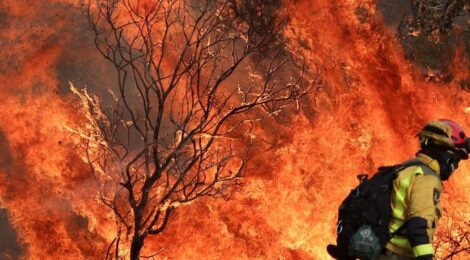
Why Have Missing Sardines Of The Iberian Peninsula Produced The Worst Wildfires In History
Spain faces its worst wildfire season in 30 years, with 40 active blazes and more than 30,000 evacuated
A Call for Ocean Restoration To Bring Back The Cooling Clouds, Rain, and Sardines!
The Iberian Peninsula is gripped by its worst wildfire season in three decades. As of August 2025, more than 40 active blazes have devastated regions across Spain, including Ourense, León, Zamora, and Cáceres. Over 31,000 people have been evacuated and more than 344,000 hectares have been incinerated—far surpassing any previous annual records. The scale and speed of devastation are unprecedented, with nearly 350,000 hectares burning in just 13 days, almost matching the ruin caused during all of 2022.
As we search for explanations and solutions, it’s crucial to look beyond traditional land-based factors. The worsening arid conditions, diminished rainfall, and reduced cloudiness over the Iberian Peninsula may originate beyond the lands themselves. The collapse of the region’s ocean pasture plankton blooms—the principal source of atmospheric cloud-nucleating molecules—now appears as a critical underlying cause. As ocean pastures vanish, so too do the cooling, moisture-bearing clouds that have protected Iberia for centuries. This collapse is further reflected in the long-term decline of the iconic Iberian sardine—an essential food and cultural symbol of the region—whose plummeting numbers directly mirror the disastrous deterioration of these once-vital ocean pastures.
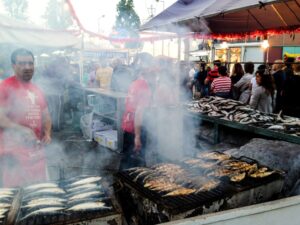
The Link Between Ocean Pastures, Clouds, Rain, Sardines, and Fire
Years of research show that healthy ocean plankton blooms generate cloud condensation nuclei (CCN) through biogenic aerosols such as dimethyl sulfide (DMS) and marine polymer gels. These particles seed clouds, cool the atmosphere, raise albedo, and deliver rain-bearing airflows inland. When ocean pastures are depleted, this natural climate regulation collapses—leading to fewer clouds, lower rainfall, and an explosion of wildfire risk. At the same time, these diminished plankton pastures cannot support abundant fish life, especially sardines, whose numbers have been in steep decline—a living indicator of ocean ecosystem health and productivity.
Recent studies confirm a significant downward trend in summer precipitation in the Iberian Peninsula since the late 1990s. Cities like Valencia and Málaga now record just 18mm and 10mm of rain in summer, respectively—a stark and unsustainable drop from historic norms. Meteorological agencies warn that these conditions feed a vicious fire cycle, as depleted cloud cover and persistent dryness leave landscapes tinder-dry and vulnerable to ignition.
Why Ocean Pasture Collapse Drives Drought, Fires, and Fisheries Disaster
The science is compelling: plankton blooms protect themselves from excessive solar exposure by producing DMS, which seeds the formation of cooling clouds over land. As plankton diminish, summer clouds decline—resulting in higher sunlight intensity, increased surface temperatures, and further reduction in rainfall. This climate feedback fuels more fires, further degrades ecosystems, and deepens the biodiversity crisis. Simultaneously, the same lost productivity spells disaster for regional fisheries—most visibly for the once-thriving sardine, whose collapse signals the loss of both food security and ecological stability.
Marine phytoplankton blooms in the northeastern Atlantic, critical to the Iberian climate and fisheries, rely on upwelling and nutrient supply. Today, weaker upwelling—driven by climate shifts—means fewer blooms, diminished DMS, less rain delivered to the interior, and reduced support for key fish populations. A dramatic indicator of this collapse at the base of the food chain is the more than 50% decline in surface krill populations over the past 60 years in the North Atlantic. This trophic proof reveals an even worse decline in the ocean phytoplankton pastures that feed the krill and generate the essential cloud-nucleating molecules that bring the rains. This loss is now recognized as a core driver of declining clouds, rainfall, fisheries, and ecosystem health for the Iberian region.
Click to read more…
The collapse of ocean pastures is further underscored by the catastrophic decline of Portugal’s iconic sardine fishery. Sardine stocks off the Portuguese coast have plunged dramatically from around 106,000 tonnes in 2006 to approximately 22,000 tonnes in 2016—less than half the biomass considered safe for sustainability. The crisis became so severe that in 2017, scientific advisors recommended a 15-year fishing moratorium to allow the stocks to recover.
This proposal, met with widespread political controversy, nearly triggered a vote of non-confidence in the Portuguese government in 2018. While the moratorium was never fully implemented, emergency restrictions on fishing quotas and seasonal limits were enforced as a desperate attempt to save the fishery. This political and ecological turmoil is a vivid demonstration of the collapse of the Iberian ocean pastures that sustain not only fisheries but also rainfall and climate stability.
No Solution but Restoration: Why Ocean Pasture Rehabilitation Is Vital
Traditional wildfire responses—forestry, firebreaks, and land-focused conservation—cannot reverse this basin-scale atmospheric change. Even ambitious land restoration projects, while important, cannot by themselves reignite the region’s natural rainfall cycles because true rainmakers lie offshore.
The singular, evidence-based path forward is large-scale, nature-based restoration of the Atlantic Ocean pastures adjacent to the Iberian Peninsula. By reviving plankton blooms, we restore the natural production of cloud-forming molecules, directly jumpstarting the return of protective rainclouds and the recovery of region-defining fisheries. This restoration will bring back not only clouds and rain but the sardines and other marine life that once flourished here, offering true ecosystem renewal from the ocean up.
This approach is not speculative: large-scale pilots in the Pacific have already demonstrated nearly immediate increases in marine cloud formation, rainfall, and fish productivity, as well as rapid ecosystem recovery. Our OPR Europe plan proposes a 3-year deployment of advanced, proven ocean restoration, custom-built for the Atlantic’s unique conditions. Plankton and fish respond quickly to restoration efforts. Satellite, fisheries, and ground monitoring can verify the recovery of cloud systems, rainfall, and marine life—directly disrupting the feedback loop between drought, cloud loss, wildfire, and fisheries collapse.

Restoring ocean pastures brings back the cooling clouds, rains, and fish! Click to read more
The Perfect Policy Match: Europe’s Nature Restoration Law
A crucial new opportunity now aligns perfectly with these urgent needs. The European Nature Restoration Law is set for implementation in January 2026. Under this landmark policy, Spain and Portugal have pledged nearly €1billion each per year for ecological restoration—an unprecedented political and financial commitment to reversing region-wide environmental decline.

The EU Nature Restoration Law calls for nature-based restoration of Europe’s Trees and Seas. Click to read more
This law’s broad mandate offers the legal and financial support needed to mobilize ocean pasture restoration at scale. By aligning nature-based ocean pasture restoration within the objectives and funding framework of the European Nature Restoration Law, Spain and Portugal will be able to move rapidly to address the wildfire emergency, restore rainfall, and catalyze lasting climate, water-cycle, and fisheries resilience.
The OPR Europe plan is ready to work within this new framework, ensuring that these billion-euro annual investments yield real, rapid, and lasting results: restoring marine clouds, renewing rainfall, reviving forests and fisheries—including the celebrated Iberian sardine—and securing the future of the Iberian Peninsula in perfect harmony with Europe’s bold environmental vision.
Supporting Evidence
-
Recent decrease in summer precipitation: Multiple studies confirm significant drops (as much as 17.5mm less rain in some regions).
-
Importance of plankton to cloud formation: Ocean plankton are the dominant source of natural cloud-condensation nuclei, producing DMS and aerosol gels.
-
Documented collapse of ocean pastures and fisheries: Linked to weakened upwelling, warming seas, and reduced nutrient inputs—well-studied for the Iberian Atlantic; the crash in sardine numbers is a direct indicator.
-
Trophic proof from krill decline: The more than 50% drop in North Atlantic krill populations over 60 years signals an even worse collapse of the foundational phytoplankton pastures that feed them and bring rain.
-
Political and ecological crisis of sardine fishery: The 2017 proposed 15-year sardine fishing moratorium in Portugal, which nearly toppled the government in 2018, underscores the severity of ocean pasture collapse.
-
No alternative solutions presented: Land interventions alone cannot revive rainfall or marine productivity; true resilience requires restoration of atmospheric and marine cycles.
-
Nature-based ocean restoration is proven and scalable: OPR pilot projects deliver immediate climatic and ecological effects, with robust monitoring and adaptive management platforms now available.
-
Europe’s new restoration law supports full ecosystem rehabilitation: The billion-euro pledges provide real momentum for comprehensive, science-driven action.
A Final Call to Action
Spain and Portugal are now at historic and dangerous crossroads. The wildfire devastation of more that 350,000 hectares displacing scores of thousands of residents serves as a planetary warning shot—but also as a policy and scientific turning point. The singular, rapid solution to the climate crisis threatening the Iberian Peninsula is the massive, immediate restoration of the region’s ocean pastures. The restoration will bring back cooling clouds and vital rains, revive forests, and return the region’s beloved sardines and fisheries—restoring ecological and cultural lifelines. Aligning this deployment with about to be implemented European Union Nature Restoration Law, backed by extraordinary financial and political will, offers a clear path to restoring clouds, rain, food, forests, and hope for generations to come.
References
-
“Spain faces its worst wildfire season in 30 years, with 40 active blazes and more than 30,000 evacuated,” El País, August 18, 2025.
-
Liu et al., “Recent decrease in summer precipitation over the Iberian Peninsula,” Hydrology and Earth System Sciences, 2022.
-
Alpha Lo, “Restoring Iberian rain,” Climate Water Project, October 2024.
-
Copernicus Climate Data, 2022.
-
Frontiers in Marine Science, “Dinoflagellate Assemblages in the West Iberian Upwelling Region,” March 2022.
If anyone needed a look at how ocean fertilization effects cloud and rain they just have to look at Australia’s East coast this year and follow the rain down the East coast current. Maive storm associated with coral stress along the Great Barrier Reef then triggered a one in 50y cyclone off Brisbane then a one in 500 year floods off the mid North NSW coast, now over a foot of rain so far this month in Sydney and we have already surpassed our annual total. Each rain event contributes to massive nutrient release from artificial fertilizer loss which then circulates in massive offshore eddies as it works its way down the coast feeding these massive rain events. The bottom of Australia is seeing the opposite with flow on drought over the past year or two. Thanks for all your work.
Excellent article. I fully concur. Restoration of land ecosystems should go hand in hand with ocean restoration.