The War of Words – Torpedoing Vital Climate Solution Work
In the high-stakes battle against climate change and ecosystem collapse, we are not just fighting rising emissions and dying oceans — we are fighting a war of words.
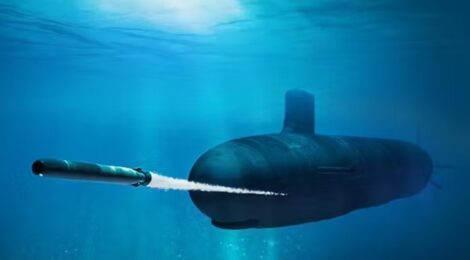
In this linguistic battle, one of the most promising nature-based solutions has been strategically struck over and over again by a linguistic torpedo fired “Ocean Iron Fertilization” with the intent to sink the world’s most immediate, most effective, and most affordable environmental solution.
This phrase/torpedo is not a neutral scientific description. It is a masterclass in misinformation, a pejorative label designed to trigger public alarm and shut down reasoned debate before it even begins. It is time to expose this rhetorical deception and reframe this critical discussion with the precision and honesty it demands. The future of our oceans may depend on it.
The standard narrative goes something like this:
“Reckless geoengineers want to dump iron into the pristine ocean to artificially fertilize it, triggering dangerous algal blooms that could create dead zones and disrupt marine ecosystems.”
This narrative is powerful because it is simple and plays on well-founded fears of human interference with nature. But it is almost entirely wrong, and its power derives from a single, weaponized word: *fertilization*.
Let’s dissect why this phrase is so profoundly misleading.
First, it creates a false analogy to terrestrial agriculture. When we fertilize a field, we are adding abundant macronutrients—nitrogen, phosphorus, potassium—to soil already rich in micronutrients. This forces a system to peak productivity. What is proposed for certain open oceans is the exact opposite. Vast stretches of the sea, known as High-Nutrient, Low-Chlorophyll (HNLC) regions, are lush with nitrogen and phosphorus but are barren deserts of life. Why? They are missing a critical *micronutrient*: iron.
Adding iron to these regions is not about “fertilizing” to force an un-natural over-production. It is about alleviating a human imposed deficiency to *restore* a foundational metabolic process that has been limited. The quantities involved are not bulk nutrients but catalytic sparks—orders of magnitude smaller than agricultural analogs. Calling this “fertilization” is like calling a vitamin C tablet a three-course meal because both prevent scurvy. The scale and mechanism are fundamentally and profoundly different.
Second, the term “fertilization” deliberately conflates the process with the devastating eutrophication caused by agricultural fertilizer runoff. That runoff indeed creates toxic algal blooms and dead zones. The goal in an HNLC region, however, is to restore the base of the food web to support life, not destroy it. The loaded term implicitly links a restorative process to a destructive one, poisoning the well of public perception.
So, if “fertilization” is the wrong term, what is really happening? The evidence points to a two-part story: a problem and a solution.
The problem is **Iron Diminishment**.
Anthropogenic climate change and modern land-use practices have drastically reduced the natural atmospheric dust that for millennia has delivered essential iron to these ocean pastures. One 2019 study in *Nature* documented a dramatic reduction in Asian dust transport, a primary source for the North Pacific. This human-caused disruption of a natural geochemical cycle—this *Iron Diminishment*—is the true ecological hazard. It is the key driver behind a cascade of collapse: declining phytoplankton, shrinking fish populations, and reduced production of a compound that helps form clouds. We have not maintained a pristine ocean; we have starved it.
Consequently, the solution is not “fertilization.”
It is **Iron Replenishment**.
This is not a radical engineering scheme. It is a nature-based mitigation strategy. It is the deliberate restoration of a critical natural process to its pre-disturbance state. We see this same principle in action when we reintroduce a keystone species like the wolf to Yellowstone National Park to rebalance an ecosystem, or when we re-flood a drained wetland to restore its natural function. Iron replenishment is not about creating something new; it is about repairing something we have broken.
This shift in terminology—from “fertilization” to “replenishment”—is not mere semantics. It is a strategic imperative that changes the entire moral and scientific framing.
* **It establishes clarity:** It accurately describes the biochemical reality without misleading analogy.
* **It provides moral force:** It identifies an anthropogenic harm (“diminishment”) and proposes a logical natural remedy (“replenishment”).
* **It enables honest positioning:** It aligns the concept with the widely accepted and positively-viewed fields of restoration ecology and nature-based solutions, as defined by the United Nations Environment Programme, rather than with the controversial and frightening specter of “geoengineering.”
The persistent use of “ocean iron fertilization” is not a scientific accident. It is a rhetorical strategy used with evil intent. For those whose ideology is opposed to any form of human intervention—even restorative—or for those who see it as a threat to other climate mitigation priorities, the term is a perfect tool. It ensures the debate is framed around fear of pollution and hubris, preventing a discussion on the actual science of ecological restoration.
We must demand better.
Scientists must lead by abandoning the pejorative term in their papers and public communications in favor of precise language like “iron limitation alleviation” or “iron repletion.” Journalists must be vigilant against using loaded language that prejudges the science. And the public must be aware that sometimes, the biggest obstacle to solving a problem is the language we use to describe it.
The war of words over our oceans’ health is a deadly distraction we can no longer afford. By disarming the misleading term “ocean iron fertilization” and embracing the truthful narrative of “diminishment and replenishment,” we can finally have the sober, science-based debate we need. We can stop arguing about a distorted fiction and start honestly evaluating a promising tool to help restore the living ocean upon which we all depend.